your wıshes are safe, probably (2026)
Performative Installation
UE Campus, Berlin, Germany
Creative Team: Naz Yigiter, Elifsu Bilici
Programming Support: Gungor Kocak
Advisor: Baharan Eghbalzadeh
your wishes are safe, probably is an ongoing media installation that examines how private acts of expression change once they are observed, recorded, and interpreted by technological systems. Rooted in the Hıdırellez wish-tree ritual, the project explores the tension between secrecy, belief, and surveillance, focusing on how wishes transform when they pass through other forms of perception.
The work emerged from an interest in the cultural belief that wishes lose their power once they are shared. Rather than treating this belief symbolically, the project stages it spatially: the act of wishing is placed under direct observation. What is traditionally a quiet, personal gesture becomes exposed, processed, and re-rendered through a system that attempts to understand it, yet inevitably misinterprets it.
Conceptual Framework
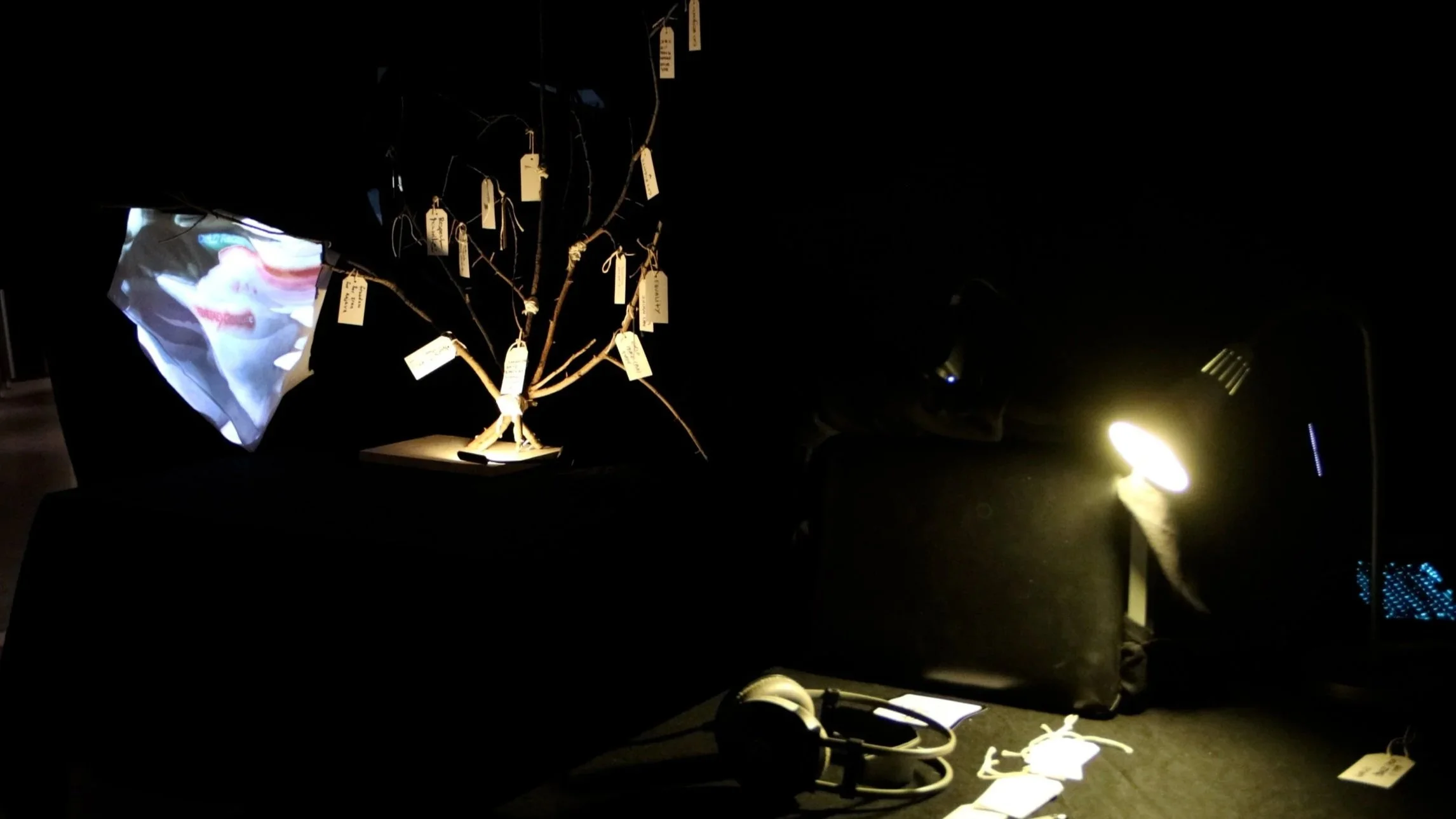
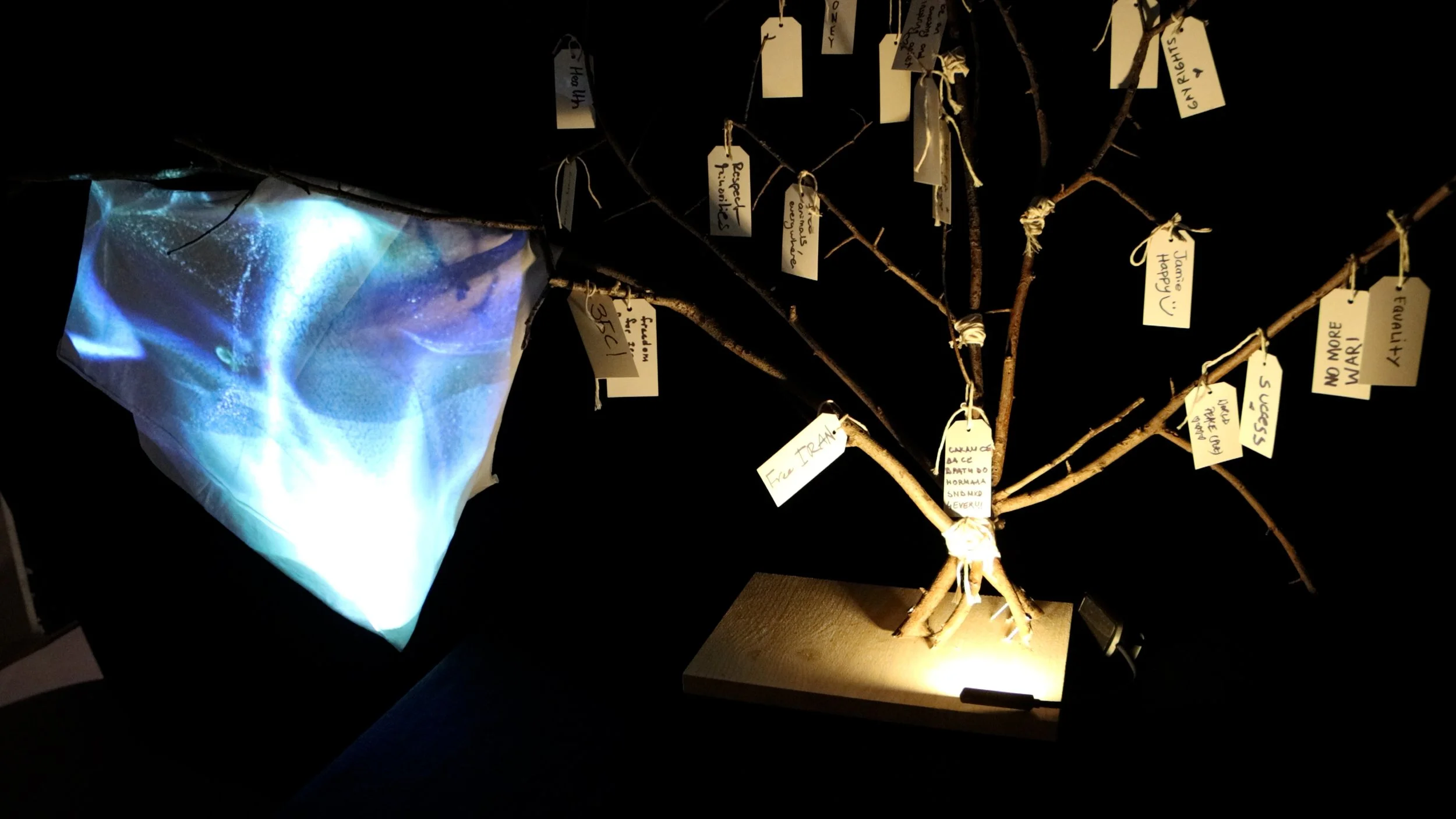
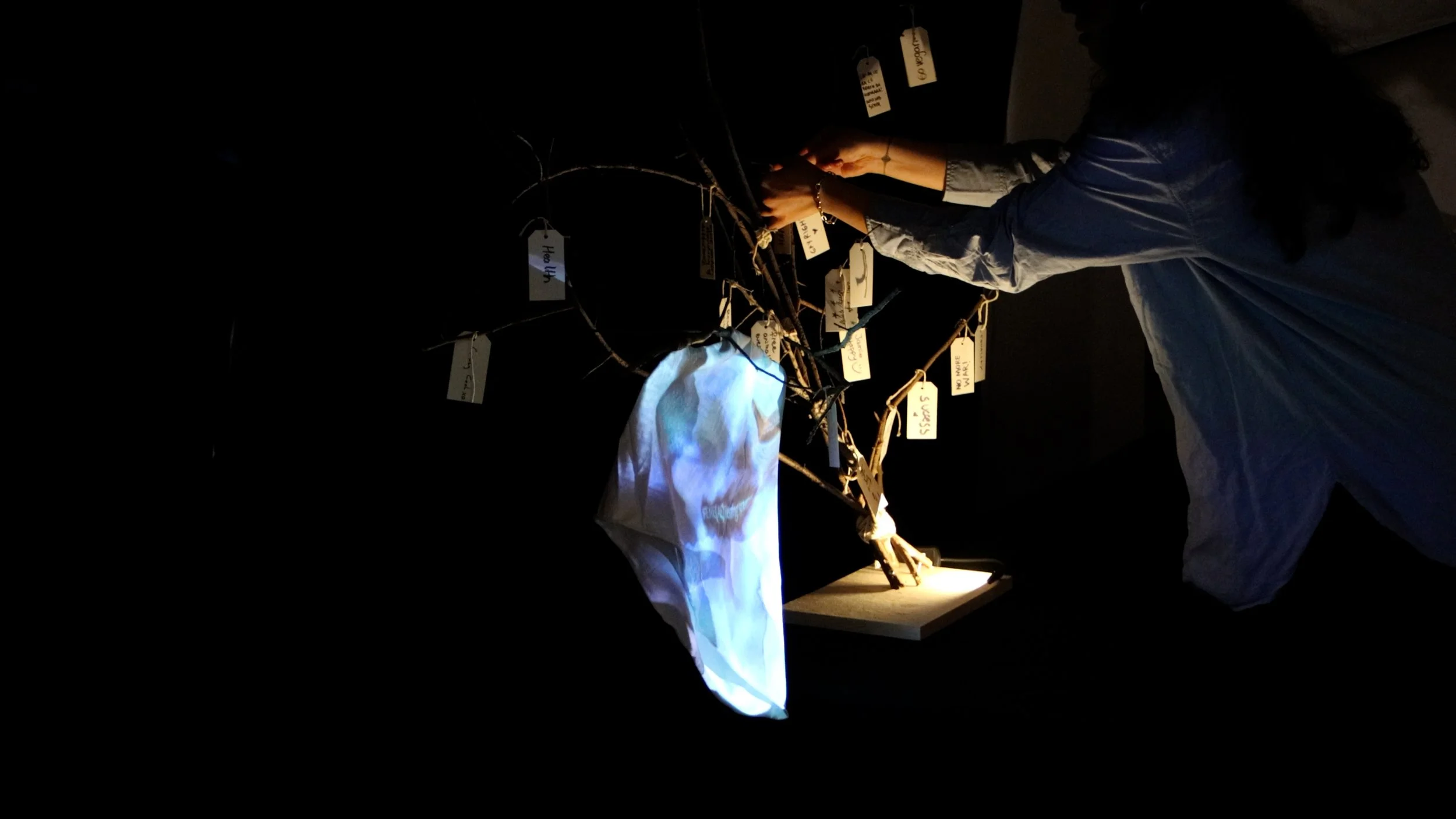
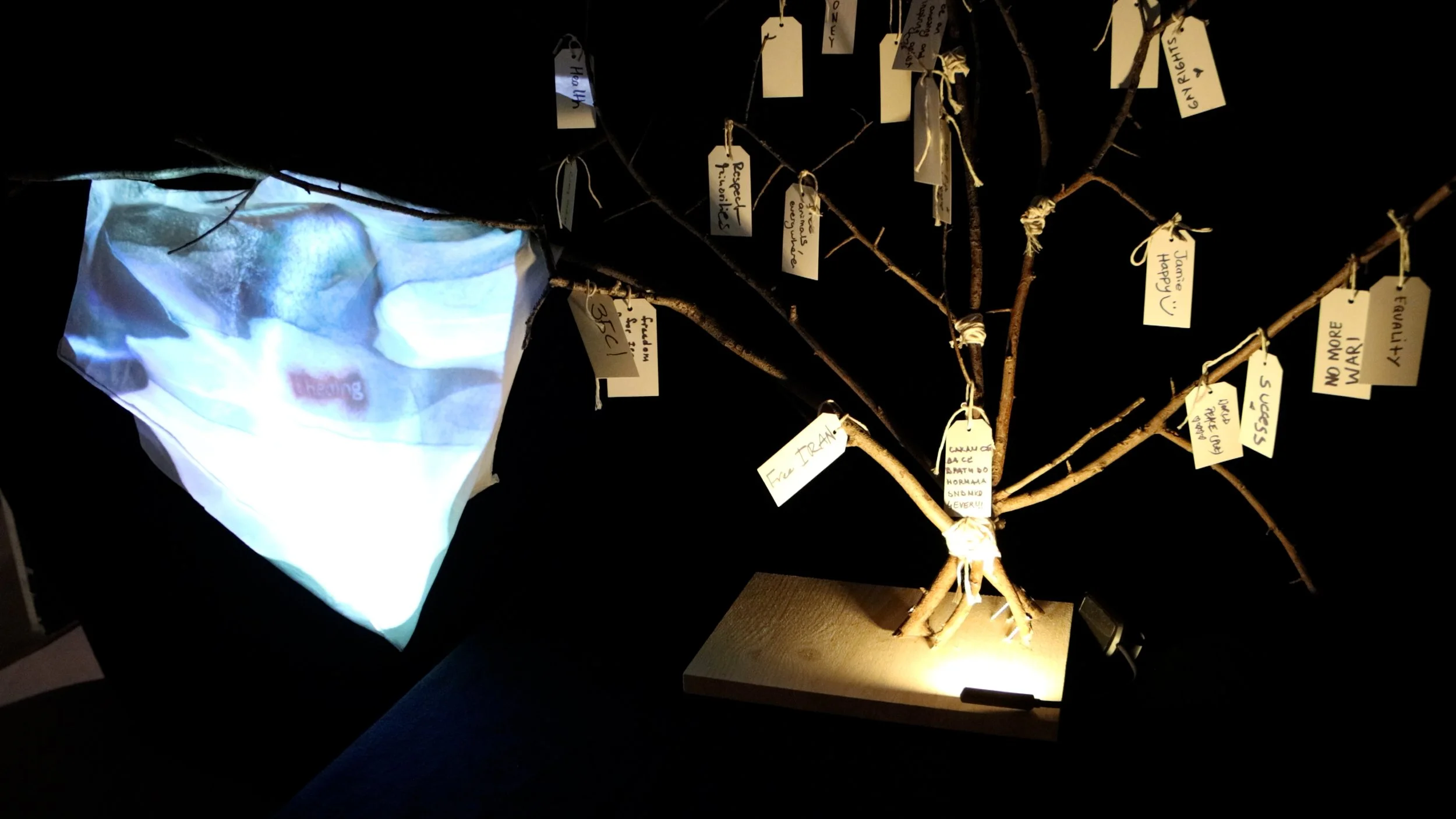
At the center of the installation is a physical tree that functions as the primary ritual object. Visitors write their wishes on paper and tie them to the branches, following the Hıdırellez tradition without digital interference. This tree remains fully analog, preserving the cultural gesture and its associated belief in secrecy.
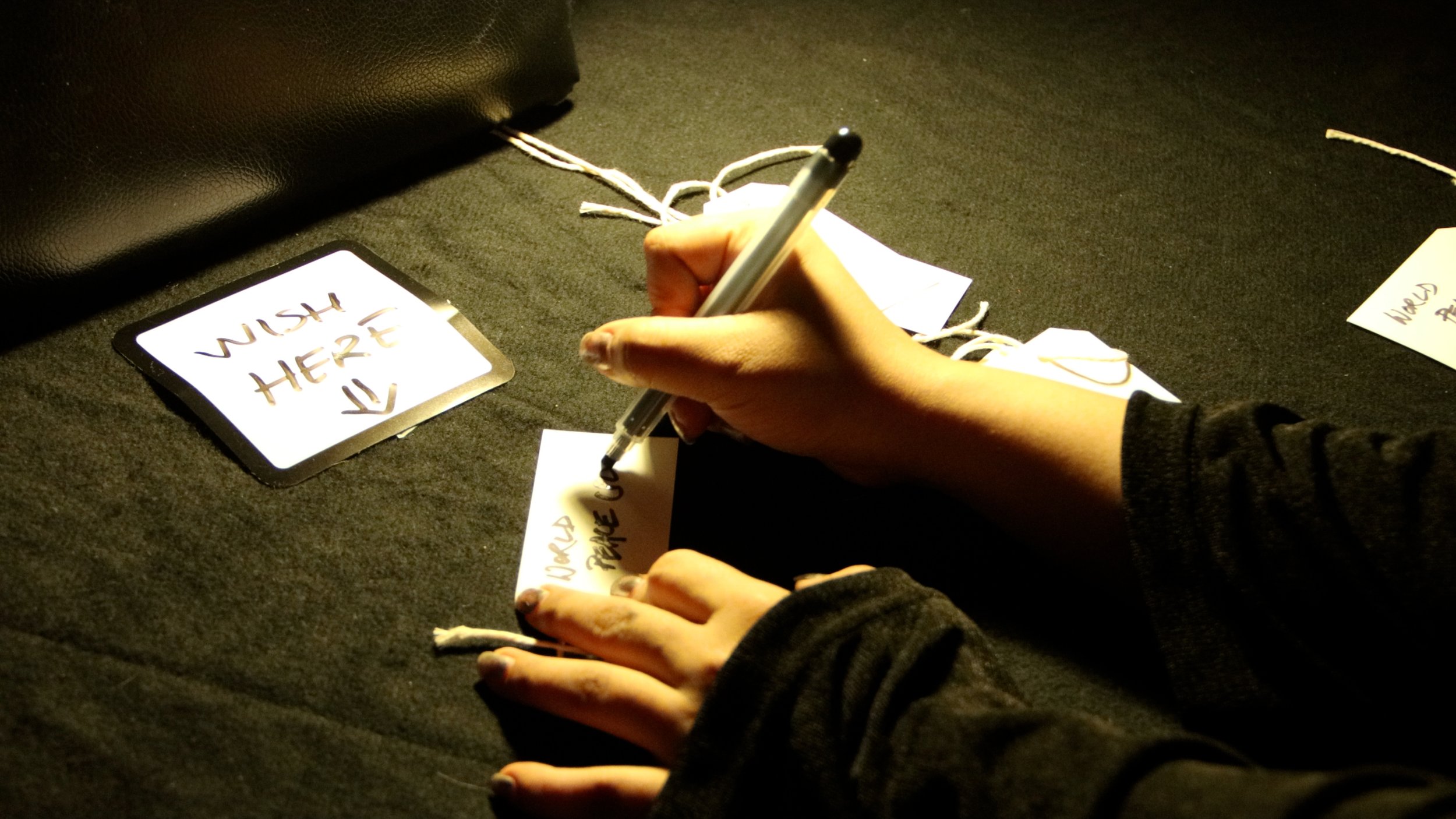
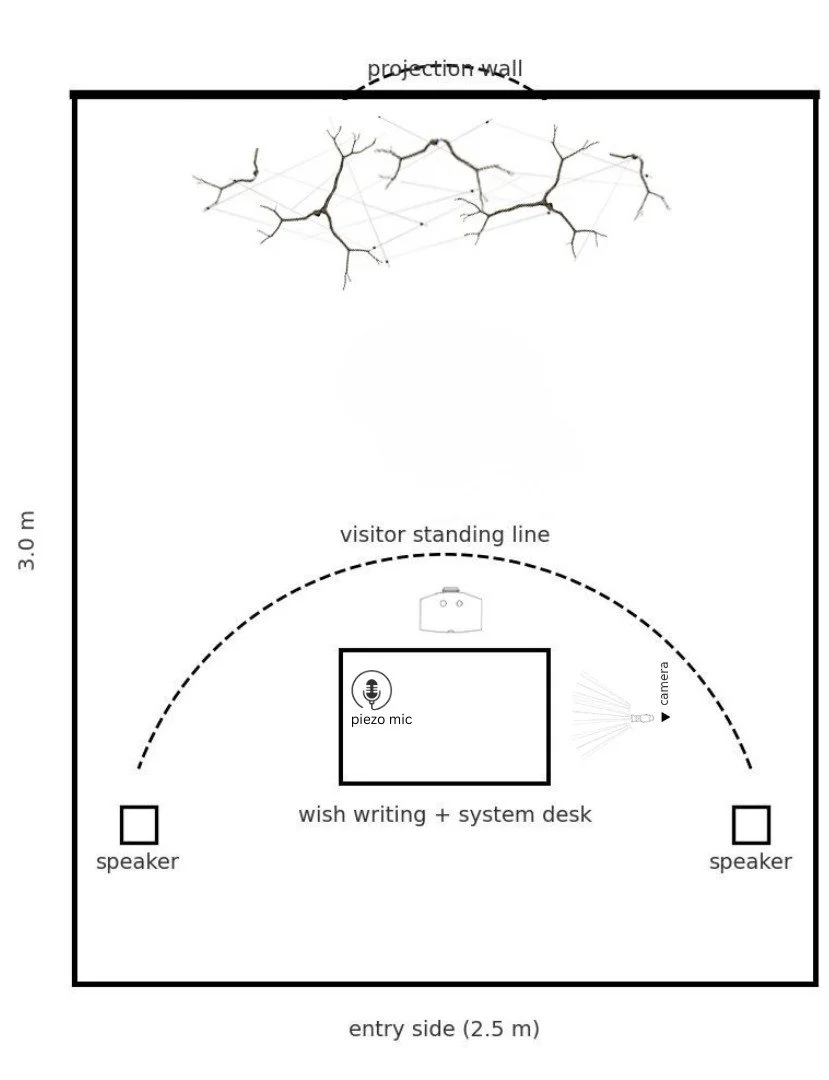
Adjacent to this ritual space is a writing table, where the act of composing a wish becomes the point of tension. When a participant approaches the table, a focused overhead light activates, sharply illuminating the surface and marking the moment as observed. A close-up camera positioned above the table records both the movement of writing and the written content itself.
The system attempts to interpret what is written. Visual data from the camera is processed and sent to a text-to-image generation system developed in TouchDesigner. Rather than reproducing the wish literally, the system produces a speculative visual interpretation—an imperfect guess shaped by partial recognition, visual noise, and algorithmic inference.
This generated image appears on a small piece of cloth attached to a separate branch, acting as a secondary manifestation of the wish. While the original wish remains tied to the main tree, hidden and unread, the system’s version exists as an exposed and transformed counterpart.
From Ritual to System Design
The project began as an investigation into wish-making rituals and their reliance on privacy, belief, and trust. Early sketches focused on directly visualizing wishes, but these approaches were abandoned in favor of a system that emphasizes misinterpretation rather than clarity.
The design shifted toward separating the ritual from the system. The physical tree was intentionally left untouched by projection or tracking, while the act of writing became the site of observation. This separation allowed the installation to maintain the integrity of the ritual while introducing a parallel technological process that operates alongside it.
By positioning the camera extremely close to the writing surface and introducing sudden, concentrated light, the system asserts its presence at the most vulnerable moment of expression. The wish is captured not as meaning, but as data.
Technical Approach
The installation is built around a minimal but focused technical setup:
A close-up camera records the writing surface and handwritten content.
Camera data is processed within TouchDesigner and used as input for a text-to-image generation pipeline.
Generated images are displayed on a cloth surface attached to a secondary branch, forming a visual echo of the original wish, interpreted by the system.
A controlled lighting system activates only when a participant is present at the writing table, emphasizing exposure and observation.
The main ritual tree remains entirely analog, with no sensors or tracking applied.
The system is not designed to produce accurate representations. Its role is to attempt understanding and visibly fail, reinforcing the gap between intention and interpretation.