locus of ınstabılıty (2026)
Research Based Kinetic Installation
Catalyst Funkhaus, Berlin, Germany
Project Manager & Creative Technologist: Naz Yigiter
Interaction Designer & Technical Artist: Shareen Rai
Spatial Designer & Sound Team Liaison: Elifsu Bilici
Documentation: Cem Kocaoglu
Sound Designer: Lakshman Mohan
Advisors: Prof. Emily Smith, Basel Naouri
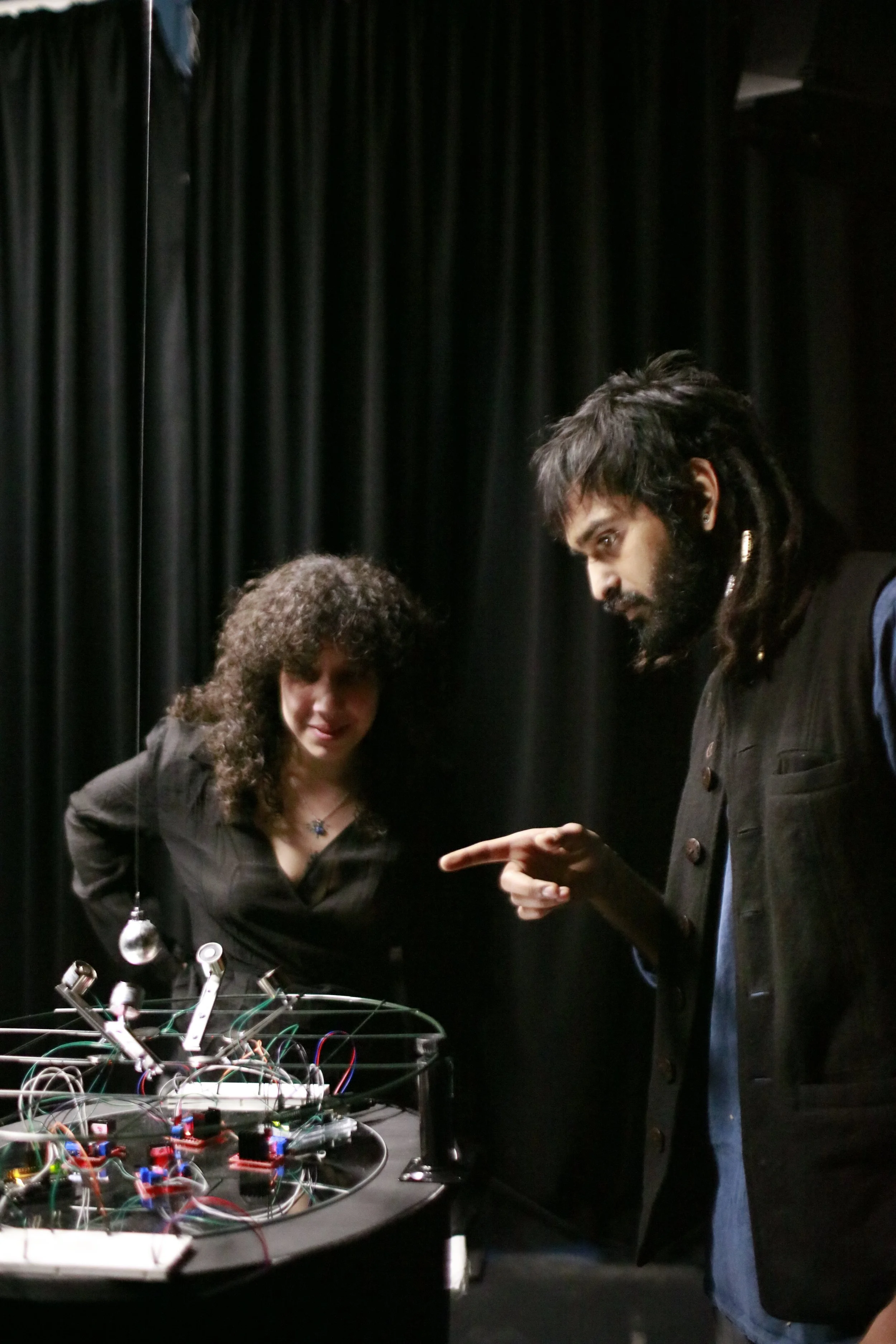
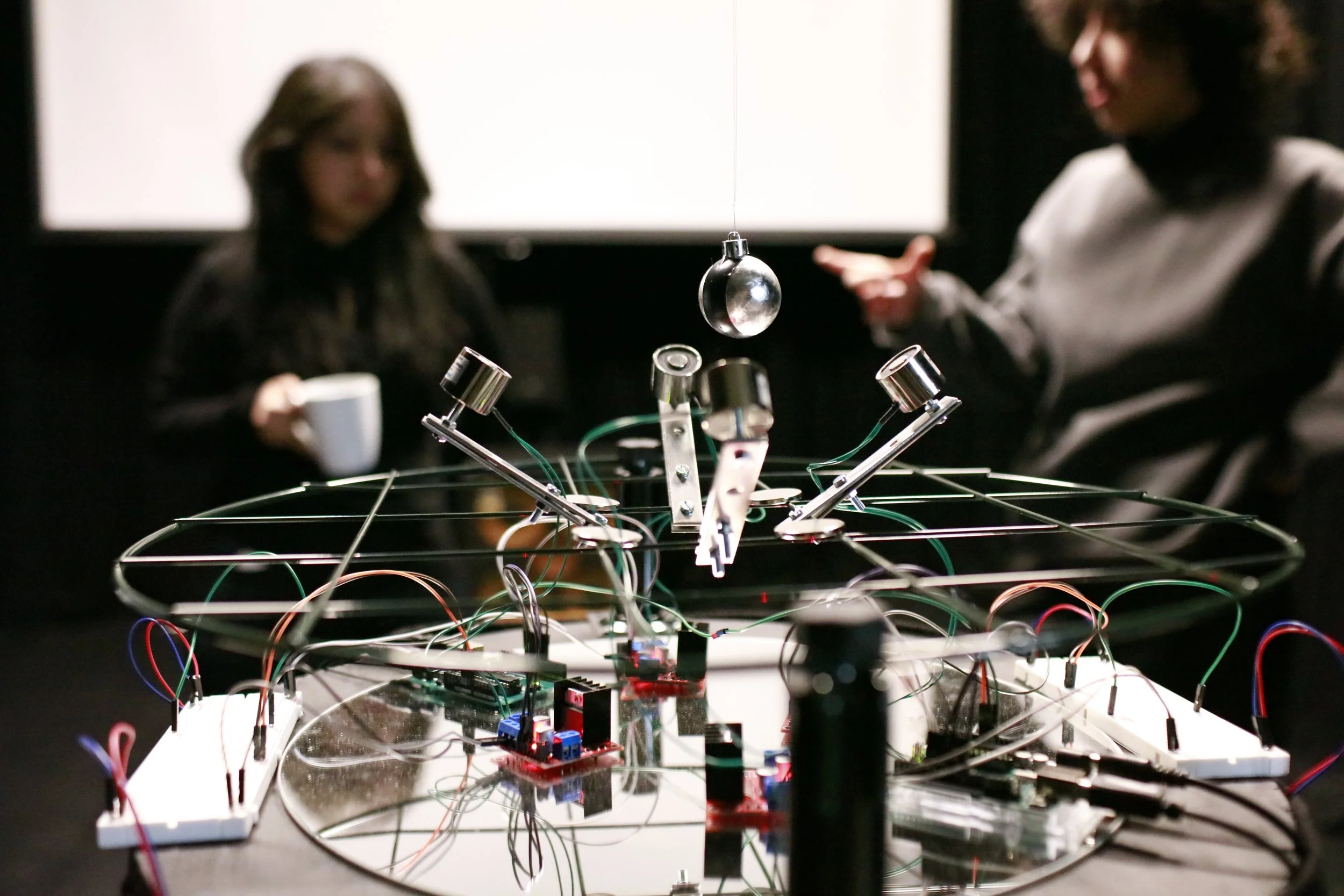
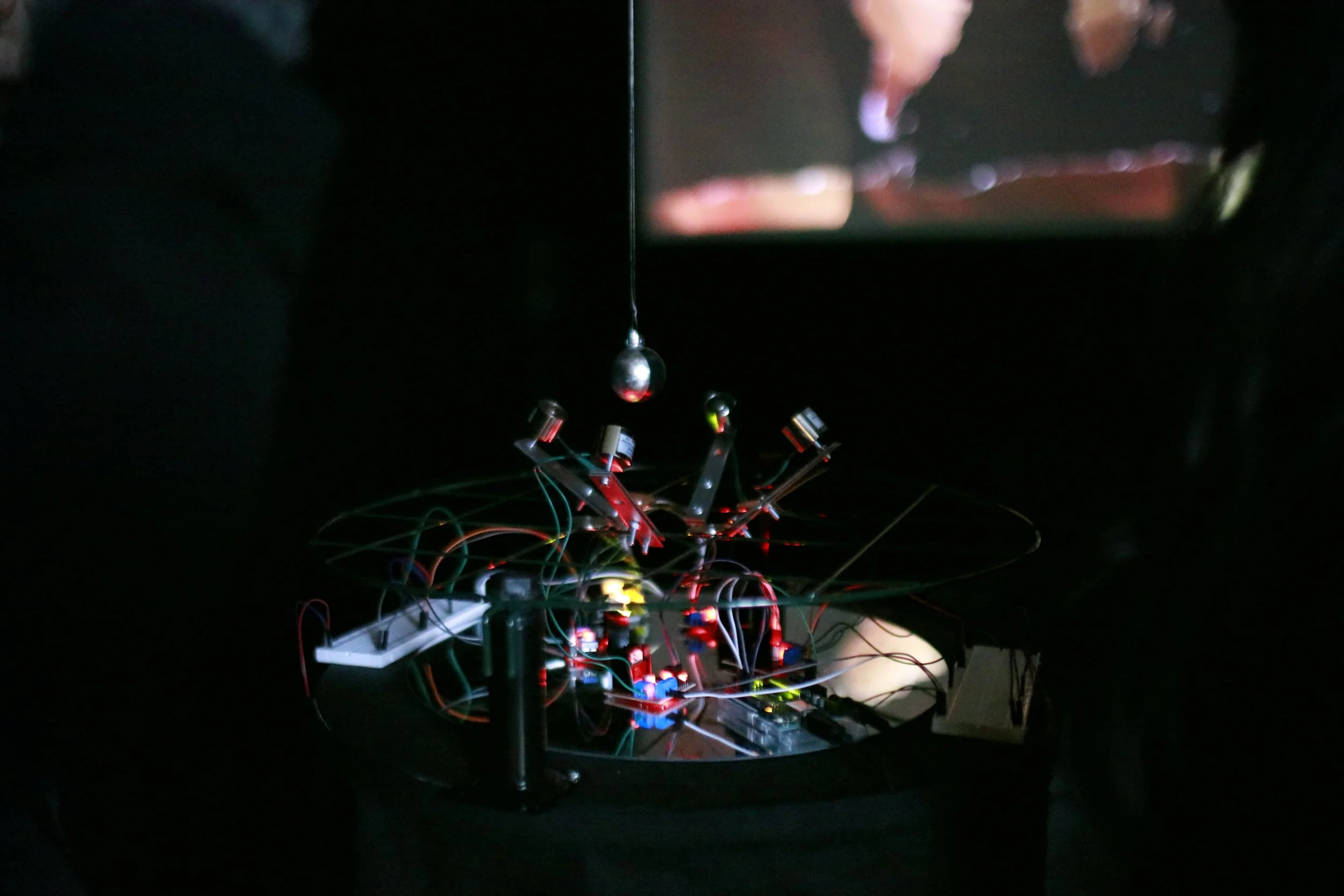
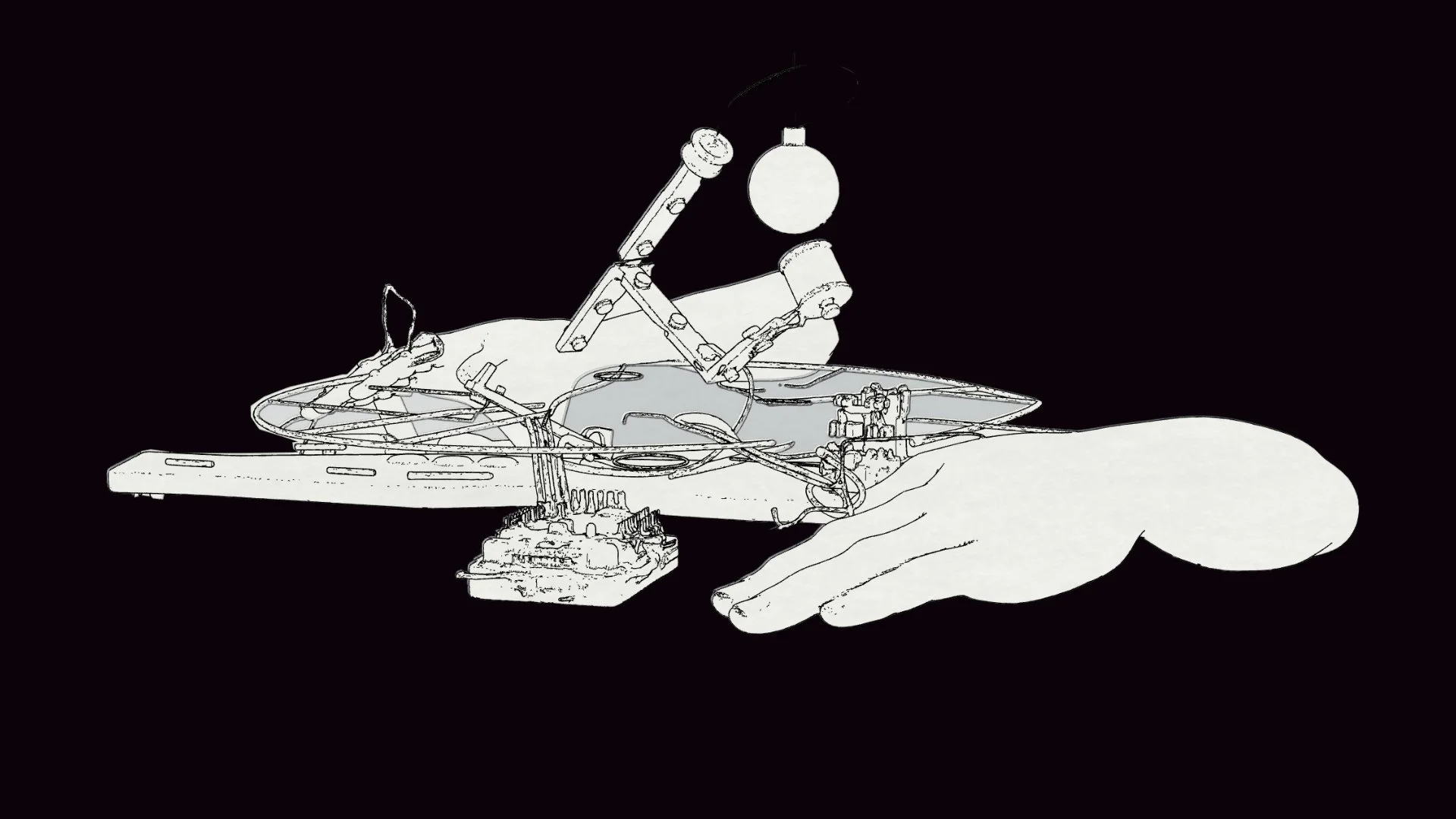
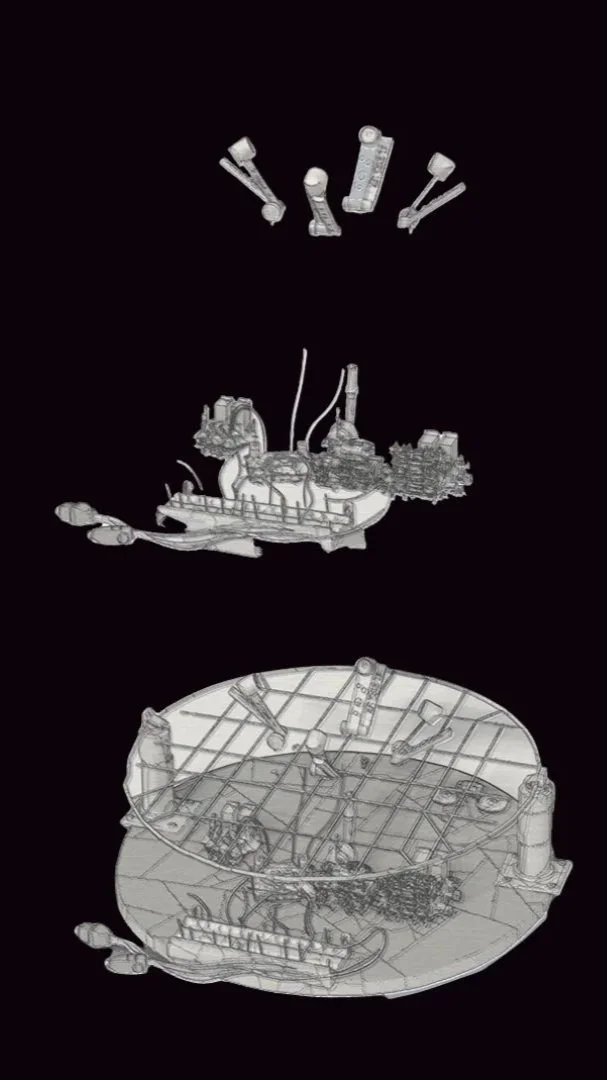
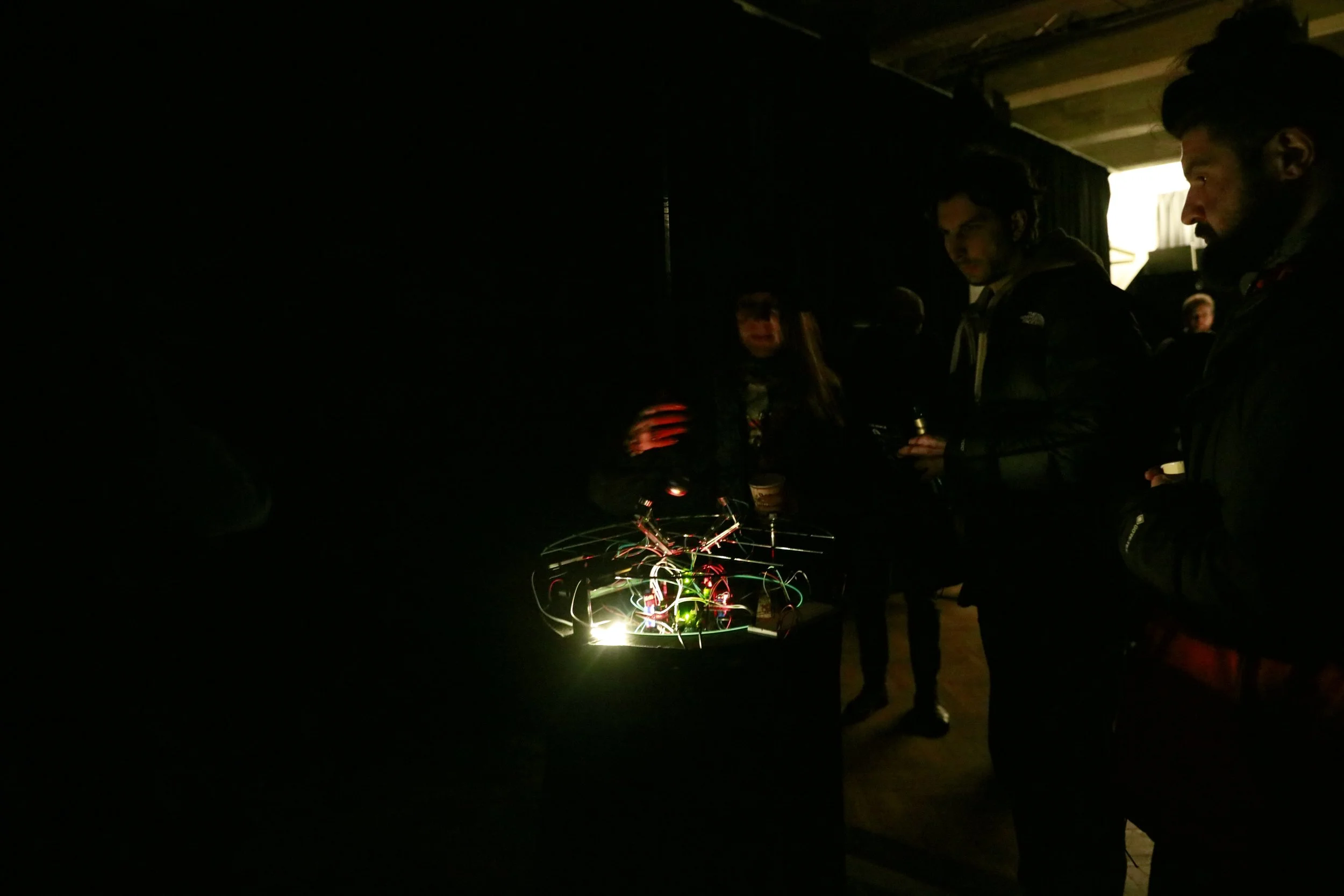
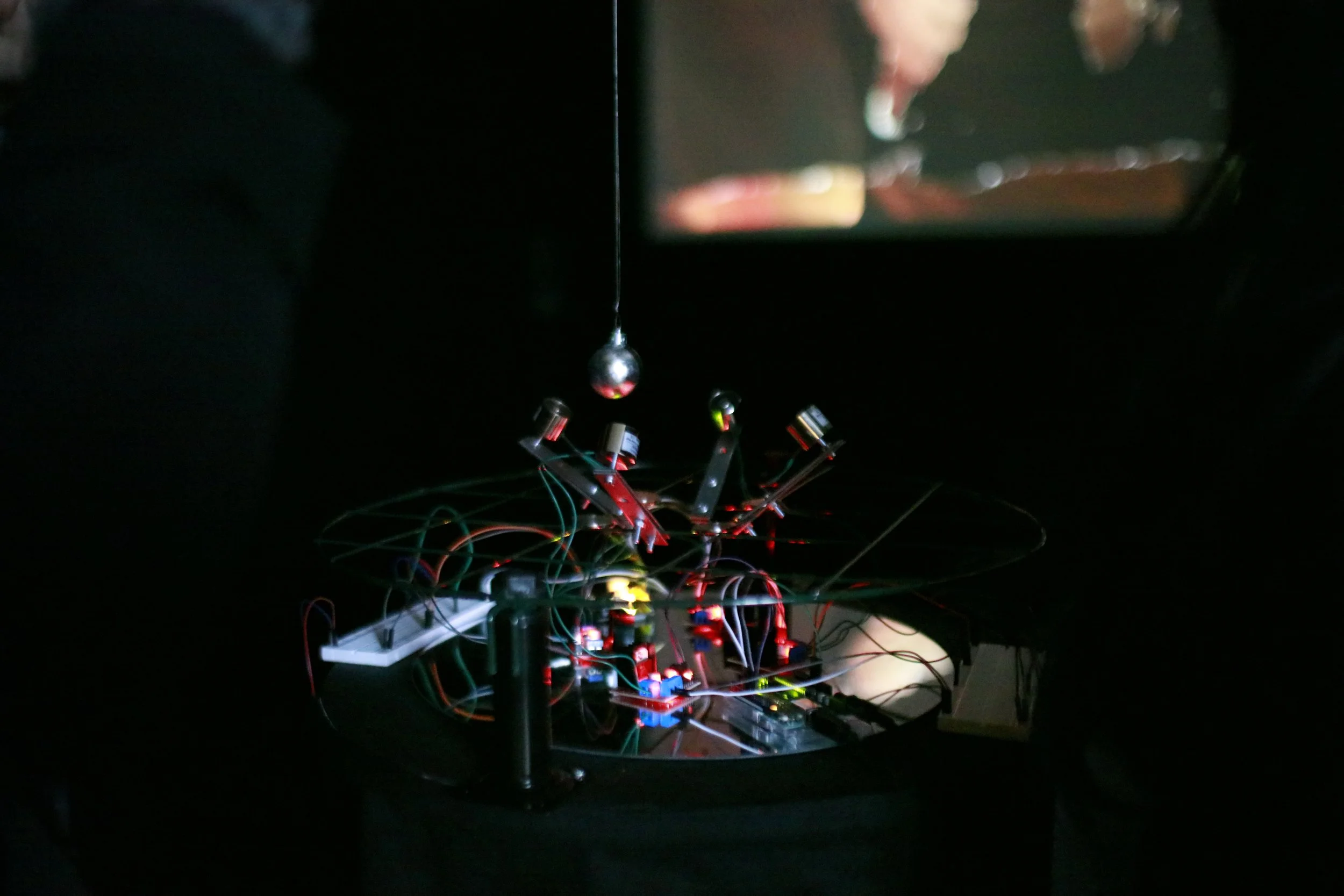
Locus of Instability is a research-based kinetic media installation that translates earthquake data into physical motion. The installation consists of a suspended pendulum positioned above four electromagnets. A simulated seismic dataset is mapped to a pulse-width modulation (PWM) system that continuously modulates the magnetic forces generated by the magnets. The shifting electromagnetic field steers the pendulum through a continuously evolving trajectory, allowing seismic signals to unfold as physical movement in space.
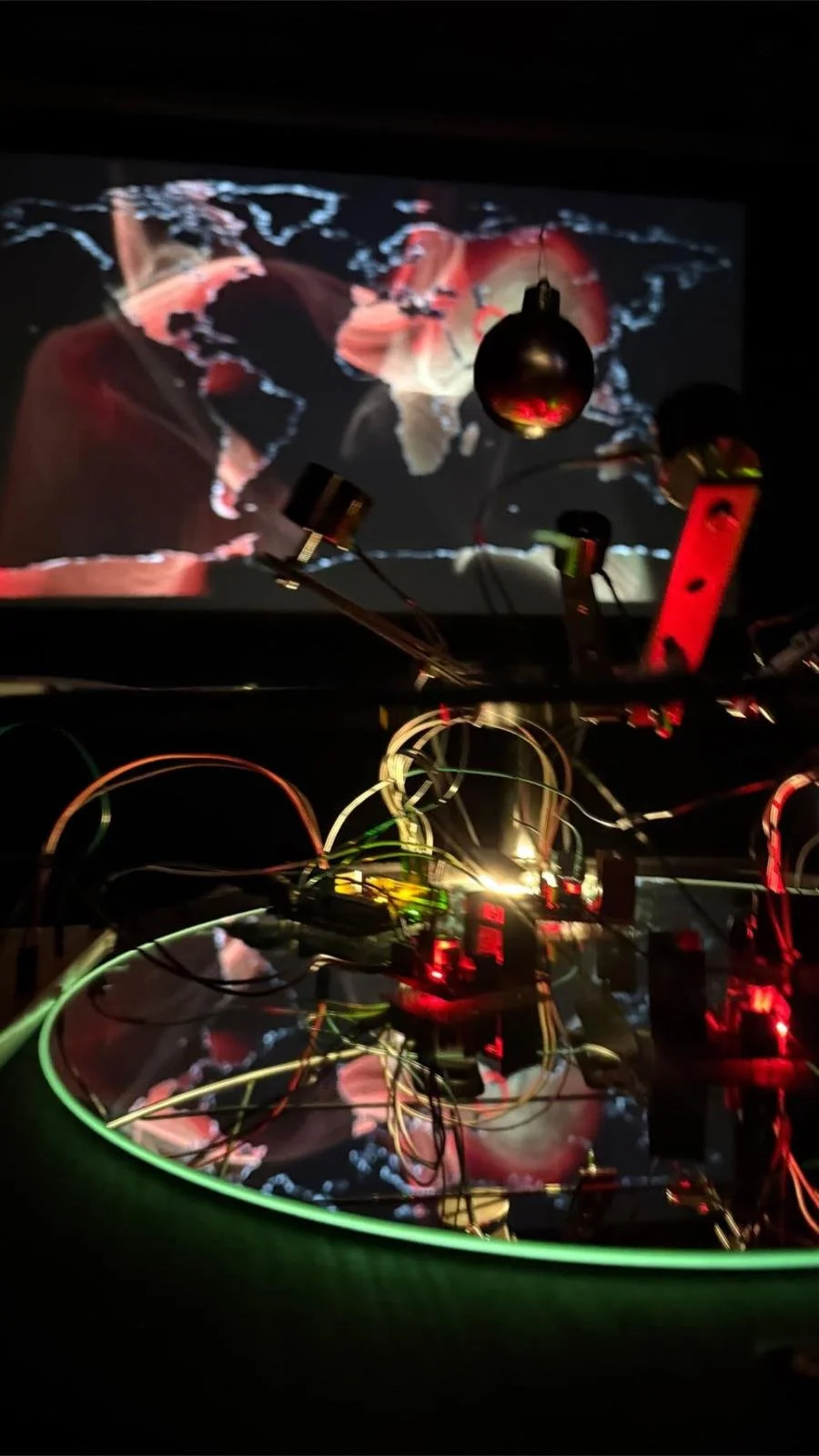
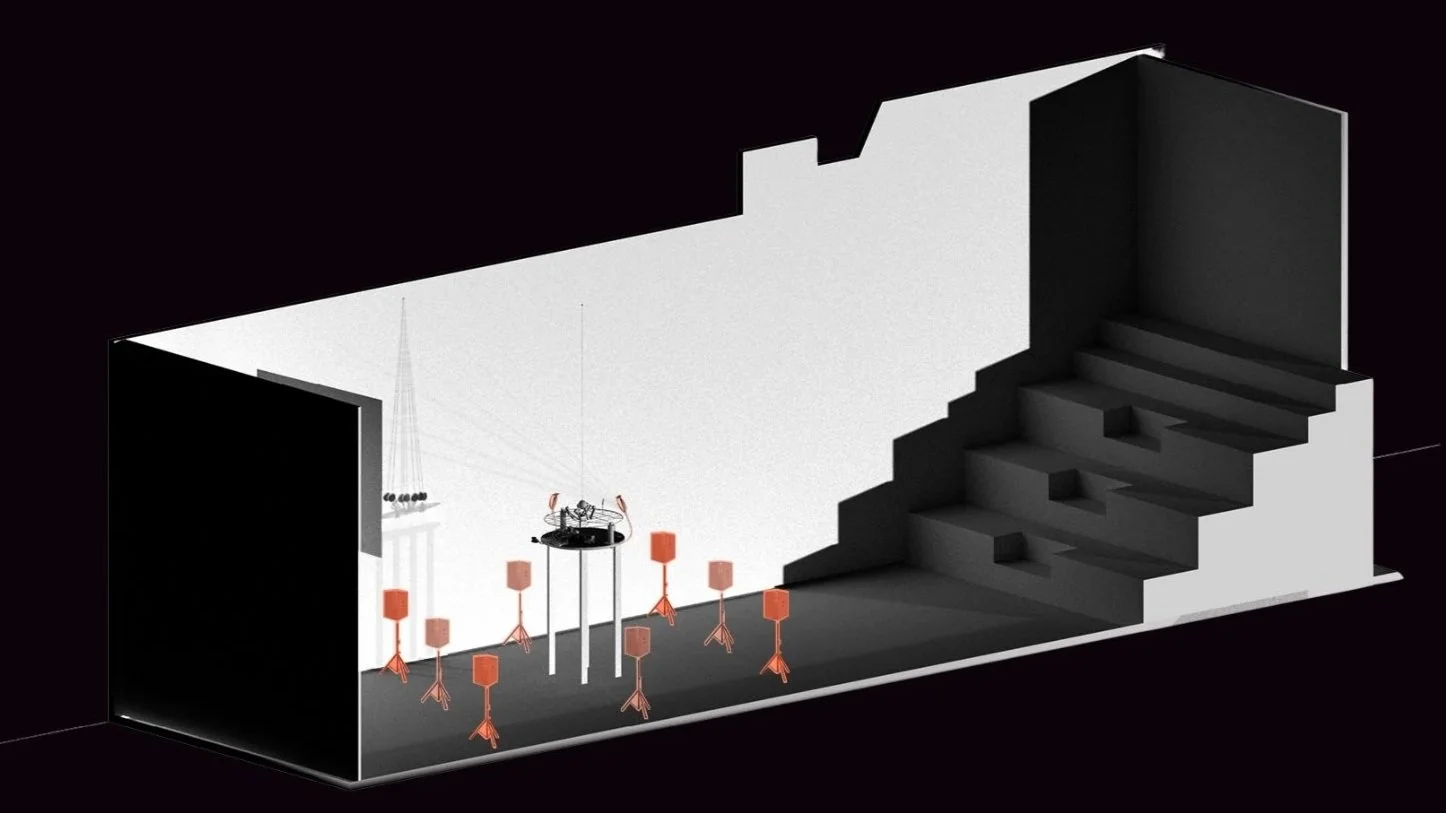
A projection screen extends the system into a visual environment. The projection contains two layers driven by the same seismic dataset. The lower layer is a generative visualization that translates seismic magnitude and pressure into fields of distortion, turbulence, and gradual spatial transformation. Above it, a global map indicates the geographic location of the seismic event currently shaping the pendulum’s motion.
Conceptual Framework
At the center of the installation, the pendulum functions as a four-dimensional seismographic instrument driven by long-term seismic records. Its motion develops autonomously over time and forms a persistent temporal axis that foregrounds the scale and continuity of geological processes. The combined kinetic and visual systems render seismic activity as an ongoing planetary condition that unfolds simultaneously as motion, image, and data.
From Initial Idea to System Design
The project began as a broad inquiry into how natural forces shape collective memory and lived environments. Early research focused on seismic data sources, tectonic movement, and the physical behavior of pendulums. Initial sketches explored literal mappings of earthquakes, but these approaches were later abandoned in favor of abstraction and simulation.
As the project developed, the focus shifted toward building a system rather than illustrating data. Seismic parameters such as magnitude, depth, latitude, and longitude were treated as independent numerical inputs rather than geographic descriptors. These values were compressed into a four-channel force system, driving electromagnets positioned around the pendulum. This decision allowed the pendulum to operate as a dynamic object shaped by multiple dimensions of data without attempting to represent specific locations or events.
In parallel, visual experiments tested how pressure, accumulation, and release could be expressed through generative fields. Through iteration, the visuals evolved into a responsive surface that reflects instability as an ongoing state rather than a moment of rupture.
Technical Approach
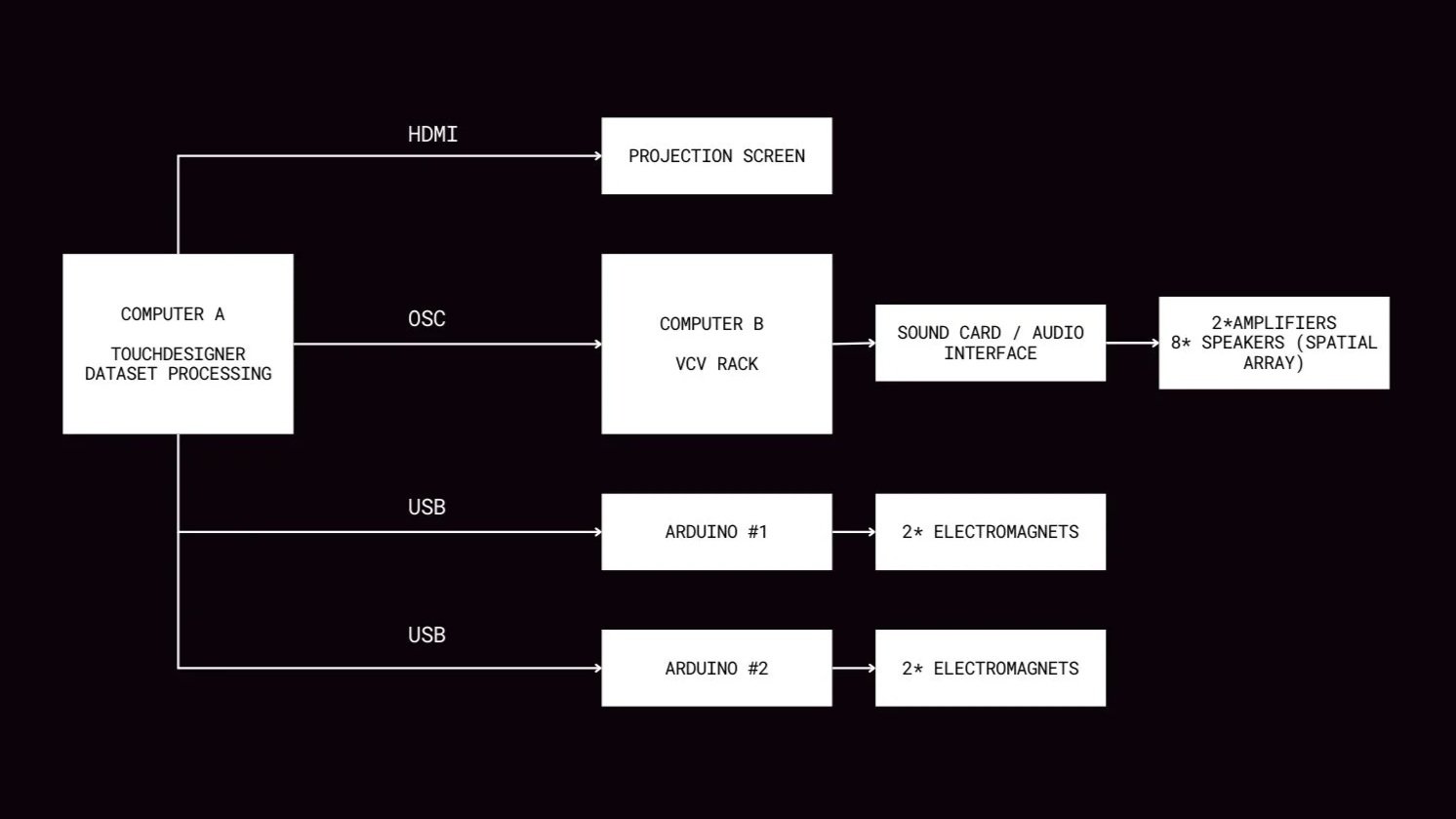
The installation is built around a modular technical setup:
Seismic data is sourced from the USGS Earthquake Catalog and processed as CSV files.
Data is normalized and temporally manipulated within TouchDesigner to create a simulated timeline rather than a direct playback.
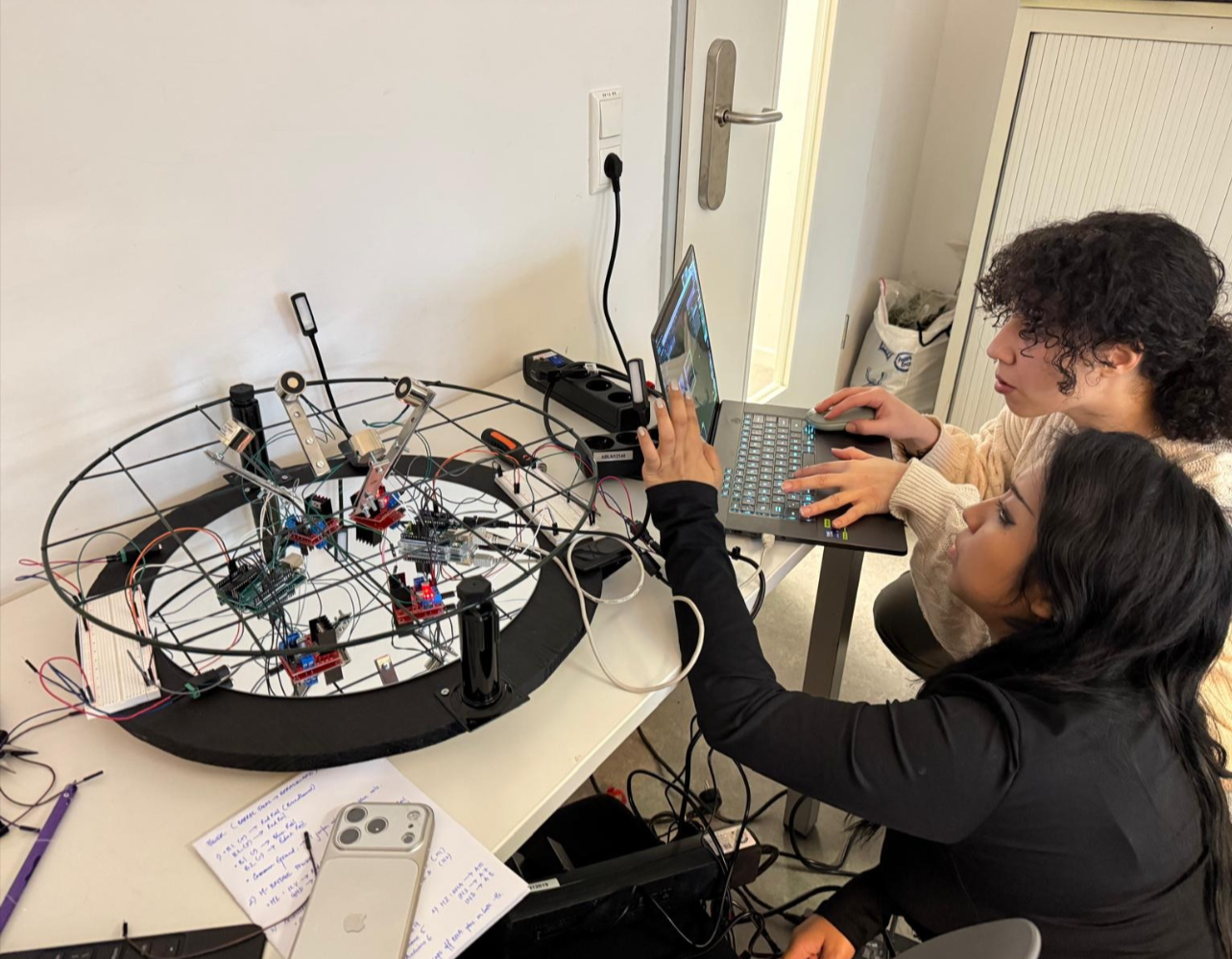
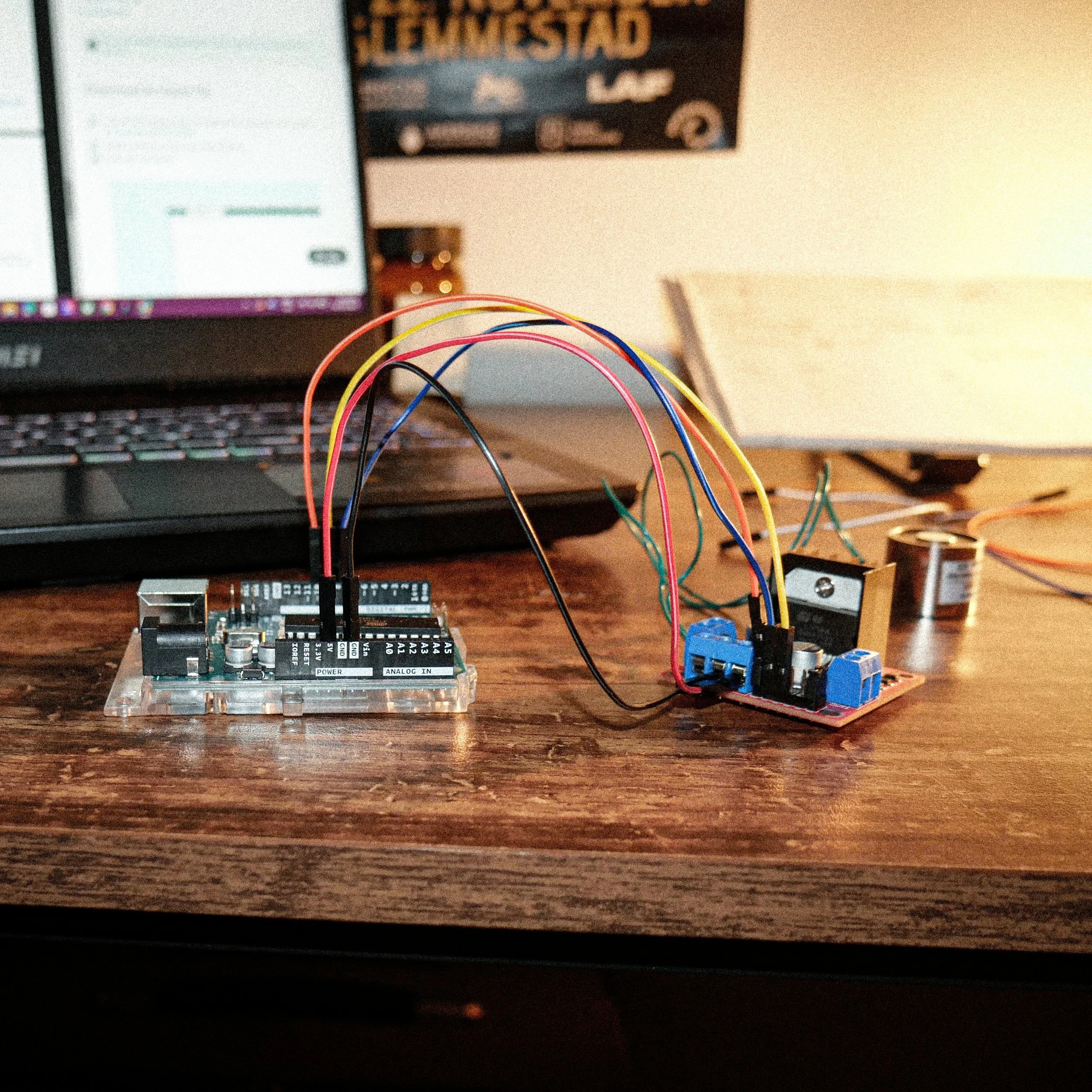
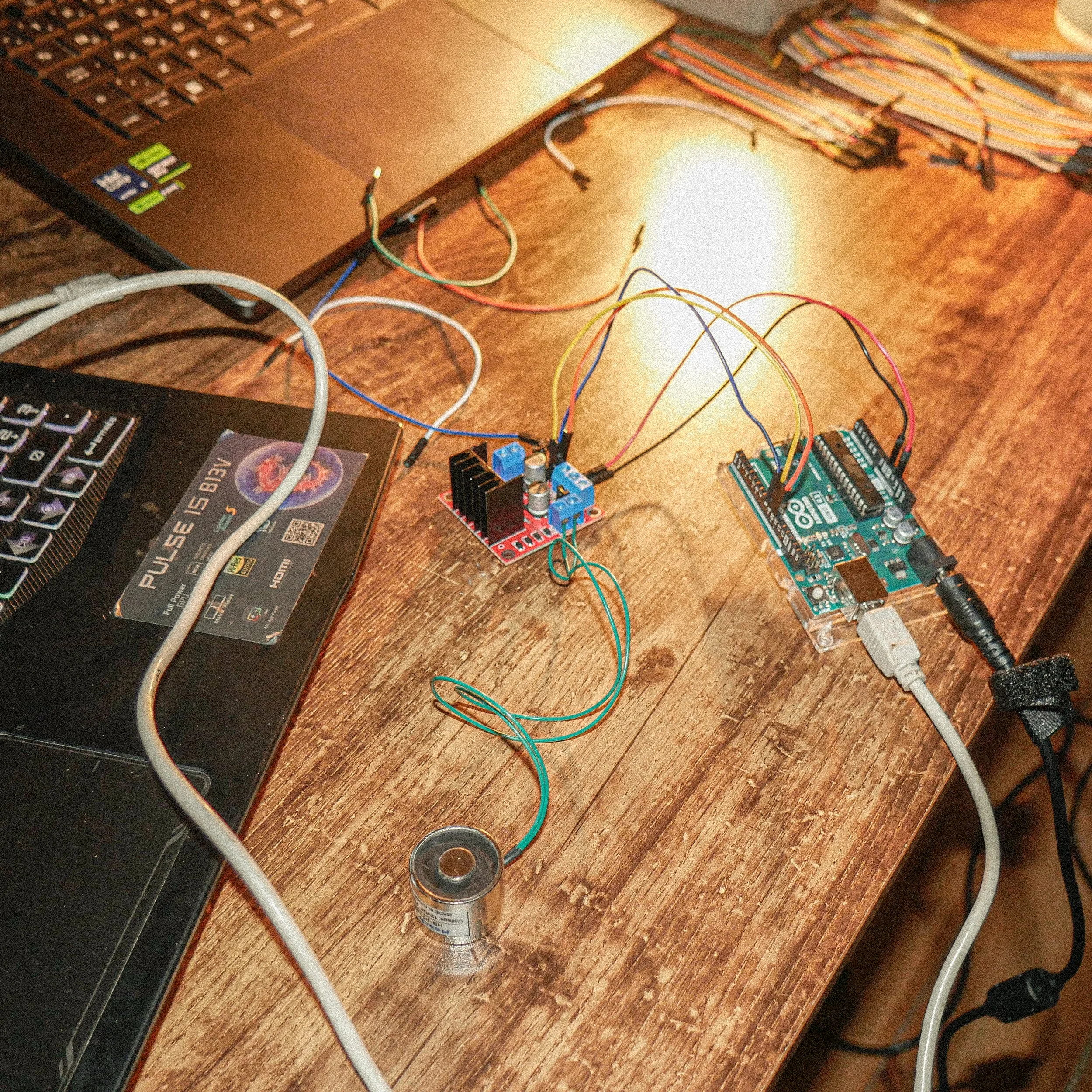
Four data streams are mapped to four electromagnets controlling the pendulum’s movement.
Longitude and latitude of running data is visualized on a map and aligned with a data-interactive displacement field visual.
Sound is spatialized and informed by the same data environment, reinforcing the sense of scale and continuity.
The system is intentionally designed to avoid real-time control or direct feedback. Interaction operates through duration and accumulation rather than immediate cause-and-effect.